About Us

About Initiative Beyond Limits

Restoring ecosystems, transforming agricultural systems, and empowering rural farmers and youth across the United Republic of Tanzania.

The Challenge & Our Purpose

Tanzania agriculture sector employs 65% of the national workforce and contributes approximately 25% of GDP, yet millions of smallholder farmers remain trapped in subsistence production, disconnected from markets, credit, and the technical knowledge required to grow viable businesses. Africa's food import bill now exceeds USD 90 billion annually, even as the continent holds 65% of the world's uncultivated arable land. Agricultural production across the region is projected to decline by 18% by 2050 due to climate change and land degradation, precisely when food supply must triple to meet a growing population. Initiative Beyond Limits works at the heart of these challenges. We are not here to run pilot projects and move on. We are here to build a generation of market-ready farmers and agribusiness enterprises capable of feeding communities, creating employment, and sustaining livelihoods long after any single intervention ends.

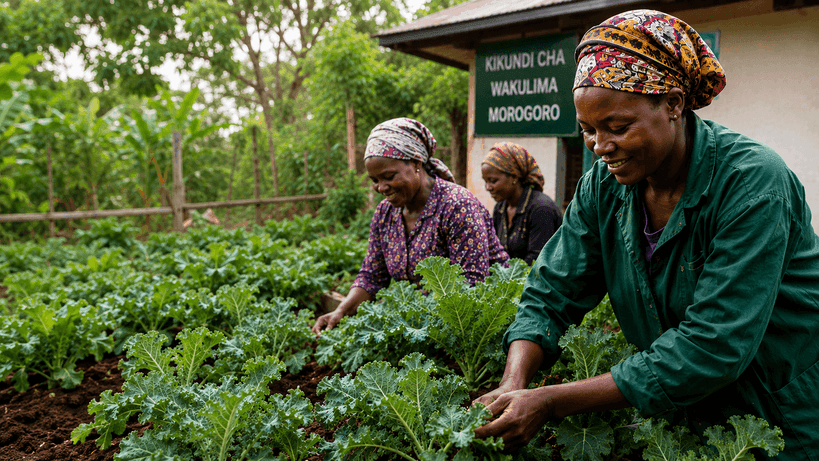
Tanzanian smallholder farmers collaborating on sustainable agroecology field - Initiative Beyond Limits
25%
Tanzania agriculture's share of national GDP
World Bank, 2024
65%
of Tanzania's workforce employed in agriculture
Beyond Farming Collective, 2024
$1T
Projected value of Africa's agribusiness sector
African Exponent, 2025
$90B+
Africa's annual food import bill
FAO / FurtherAfrica, 2025
65%
of the world's uncultivated arable land is in Africa
Africa Agribusiness Summit, 2023
Food supply must increase by 2050 to meet demand
World Economic Forum, 2025
Initiative Beyond Limits (IBL) Vision, Mission and Strategic Sustainable Focus Areas

Vision & Mission

Vision

"A Tanzania where communities are food-secure, nutritionally empowered, and resilient to climate shocks, thriving within a restored and productive environment through equitable and inclusive governance."

Mission

"To transform food systems by championing climate-smart, restorative agriculture, advocating for pro-smallholder policies, and empowering youth to become the leaders of a resilient agricultural future."

Our Theory of Change

IBL's work in agriculture follows a clear, evidence-based pathway from intervention to lasting impact.

01

Inputs

  • Training
  • Market connections
  • Technical support
  • Finance facilitation
02

Outputs

  • Farmers trained
  • Buyers connected
  • Cooperatives formed
  • Techniques adopted
03

Outcomes

  • Increased yields
  • Higher incomes
  • Reduced post-harvest losses
  • Business formalisation
04

Impact

  • Food security
  • Employment creation
  • Community economic growth
  • Climate resilience
05

Sustainability

  • Farmer-owned cooperatives
  • Self-sustaining buyer relationships
  • Next-generation leadership

Organization Objectives

The five critical pillars guiding our interventions, field work, and legislative policy advocacy.

01

Enhance Farmer Resilience

To enhance the productivity and climate resilience of smallholder farmers through the adoption of sustainable practices that contribute to both adaptation and climate change mitigation.

02

Advocate for Pro-Smallholder Policies

To advocate for equitable policies, including fair trade, land tenure security, and access to finance, that create an enabling environment for climate-resilient agriculture at local, national, and regional levels.

03

Strengthen Food Systems & Nutrition

To strengthen community food systems by integrating nutrition education and improved access to markets, thereby creating a direct link between food production and positive health outcomes.

04

Promote Youth Agribusiness & Innovation

To promote youth engagement, leadership and innovation in the agricultural sector by providing targeted training in climate-smart technologies and agribusiness, and by facilitating access to mentorship and start-up capital for young entrepreneurs.

05

Holistic & Sustainable Integration

To strengthen the integration of governance, environmental sustainability, and food systems across all programming to ensure holistic and sustainable development outcomes.

Perspectives on Agribusiness

Insights from global and national agricultural leaders shaping the future of food systems in Africa.

K
G

"Farming is a business and the private sector must fuel the development of Africa's agribusiness in upgrading smallholder agriculture to meet demand from foreign and emerging markets."

B
G

"SMEs are at the centre of Africa's agrifood landscape, and as such, they can be the vehicle to achieve sustainable growth."

G
G

"The agricultural sector in Tanzania has continued to be instrumental in boosting the national economy and bringing development to our citizens."

W
G

"Agriculture is central to Africa's economy, contributing 20% to GDP and employing over 60% of the workforce. Agricultural production is projected to decline by 18% due to land degradation and climate change, even as food supply needs to triple by 2050."